ARTIST · ARKANSAS · SOMEWHERE IN THE FUTURE
IT'S JUST TOO MUCH EFFORT TO ACT LIKE I DON'T CARE WHEN I REALLY DO.


Series
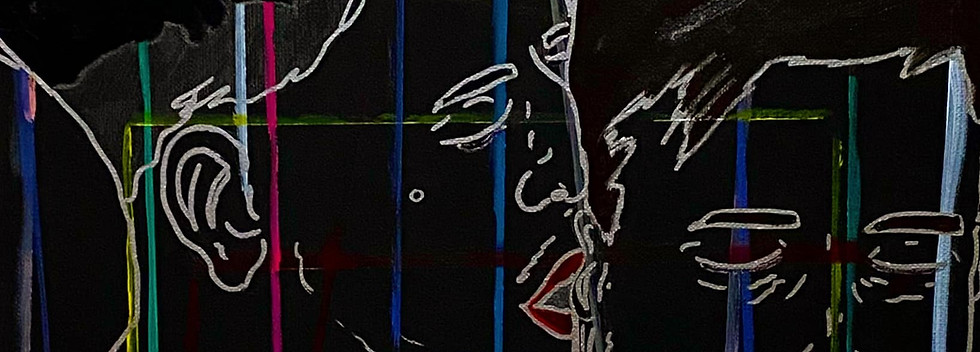
A series represent sustained investigations into a particular subject, image, idea, or visual language. Rather than treating each artwork as an isolated object, I use repetition and variation to examine how meaning shifts when an image is revisited, rearranged, or placed within a larger body of work. Some series develop organically over time, while others emerge from deliberate constraints or systems. Together, they reflect my interest in seriality, observation, and the possibilities that emerge when a single idea is given room to evolve.
Trump Series
Taken from a press photograph made in the aftermath of the 2020 presidential election, this series began with an expression that felt unexpectedly human. Against the enormous political weight surrounding Donald Trump, the image captures a fleeting moment of vulnerability: the look of a man confronting defeat. I was drawn not to celebrate or venerate this divisive time in American life, but to examine the tension between a public figure's persona and the private human being suggested within the source image.


Friends & Family Series


Drawn from my personal collection of photographs accumulated throughout my twenties, Friends & Family is an eclectic exploration of the people who have occupied my life. Working across acrylic, watercolor, and other approaches to figurative representation, these pieces became opportunities to study familiar faces through unfamiliar visual languages. Rather than presenting a singular aesthetic, the series documents experimentation itself—an evolving attempt to understand how personality, memory, and affection can be translated into an image.
Continuous Line Series
The Continuous Line series began as an exercise in imitation, inspired by the distinctive continuous-line drawings of social media artist Cale Leroy. I deliberately adopted a visual language that was immediately striking and resonated with my audience, using the constraint of a single continuous line to explore gesture, economy, and representation. Ultimately, the series also clarified my own artistic preferences: while I appreciated the immediacy and expressive quality of the technique, its looseness and gestural character felt increasingly distant from my desire for greater control and precision.


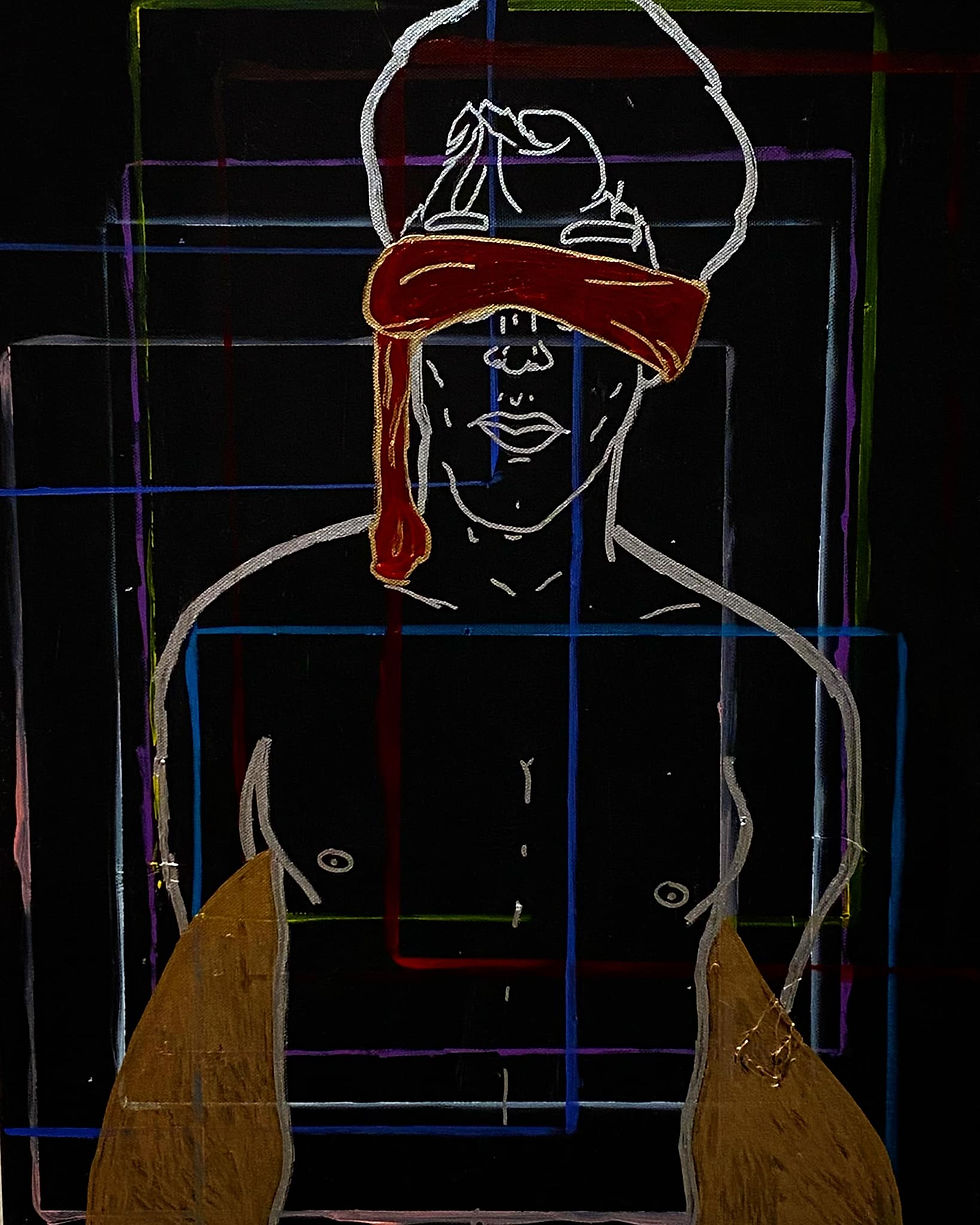


Drop Cloth began as an experiment in abstraction and process. I first covered blank canvases entirely in black ink before introducing overlapping rectangular lines in seemingly arbitrary arrangements, imagining the surfaces as discarded drop cloths bearing traces of other paintings. Against these abstract fields, I introduced figurative images of queer intimacy, creating a tension between the record of process, environmental influences, and what remains after something else has been created.
Drop Cloth Series
Nude Triptych
The Nude Triptych represents one of my most restrained approaches to figurative painting. Three narrow canvases present the same basic subject—a nude figure viewed from behind—against individual fields of white, gray, and black, with each figure reduced to a simple gold outline. By limiting both color and detail, the series shifts attention toward silhouette, repetition, negative space, and the presence of the body itself. The works explore how much can be communicated through reduction, allowing the figure to exist simultaneously as a recognizable human form and an almost symbolic mark.


Marlboro Box Series
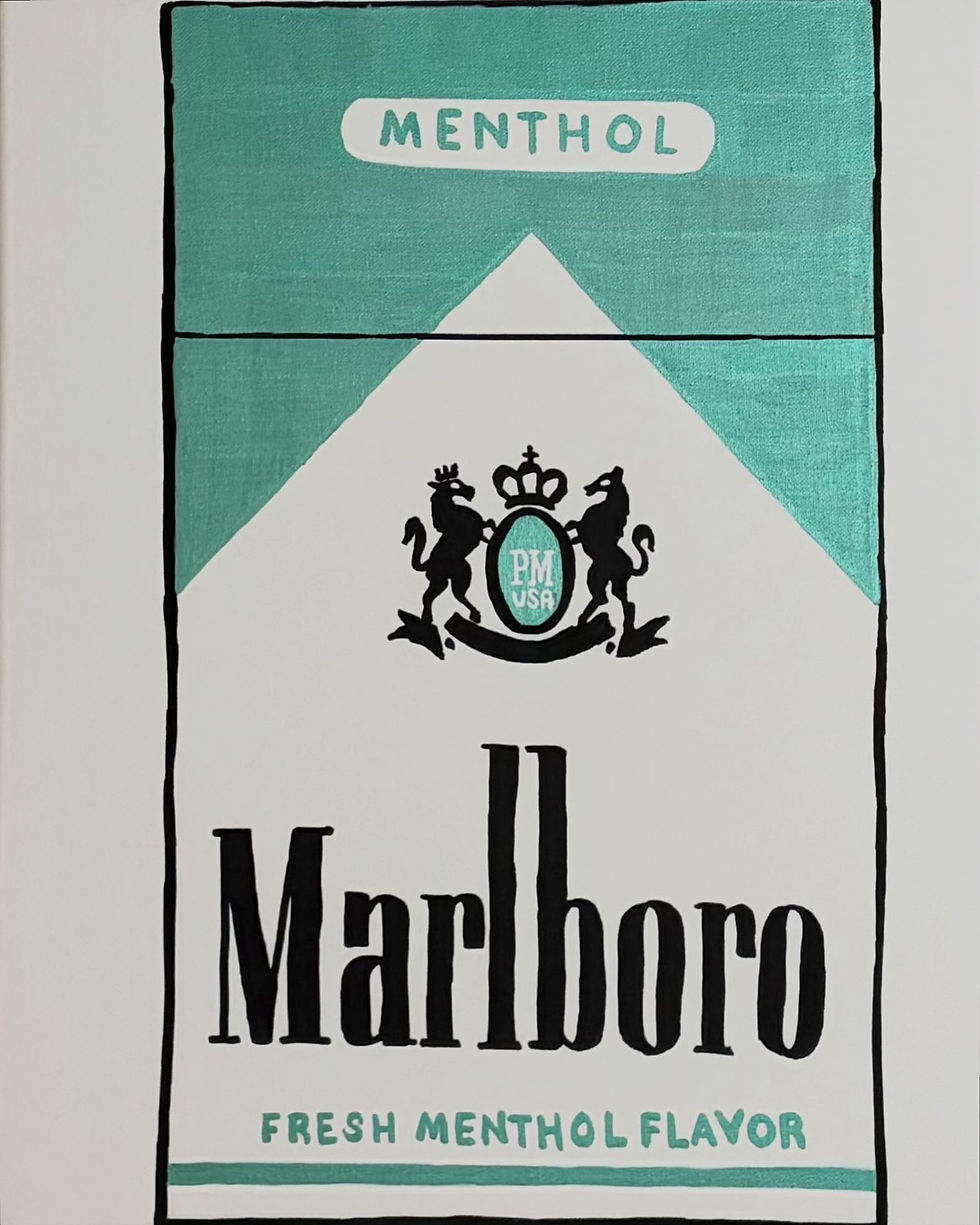
The Marlboro Box Series consists of twenty paintings, each depicting a different Marlboro cigarette package. Presented as a complete body of work, the twenty canvases echo the twenty cigarettes contained within a single pack.
The series enters into direct conversation with Warhol’s Campbell’s Soup Cans, replacing the soup can with another recognizable American commodity.
Marlboro is more than a cigarette brand. It's packaging carries a highly recognizable visual identity built around myths about gender, freedom, rebellion, and Americana while the object it sells is inseparable from addiction and consumption.
By removing the package from the shelf and repeating it across twenty canvases, I am interested in the variations available to consumers and the tension between what an image promises and what the literal product represents.
Through repetition, scale, and the labor of hand-painted reproduction, what was once designed to be manufactured identically is intimately recreated to be individual; one canvas at a time.


Dolly Series
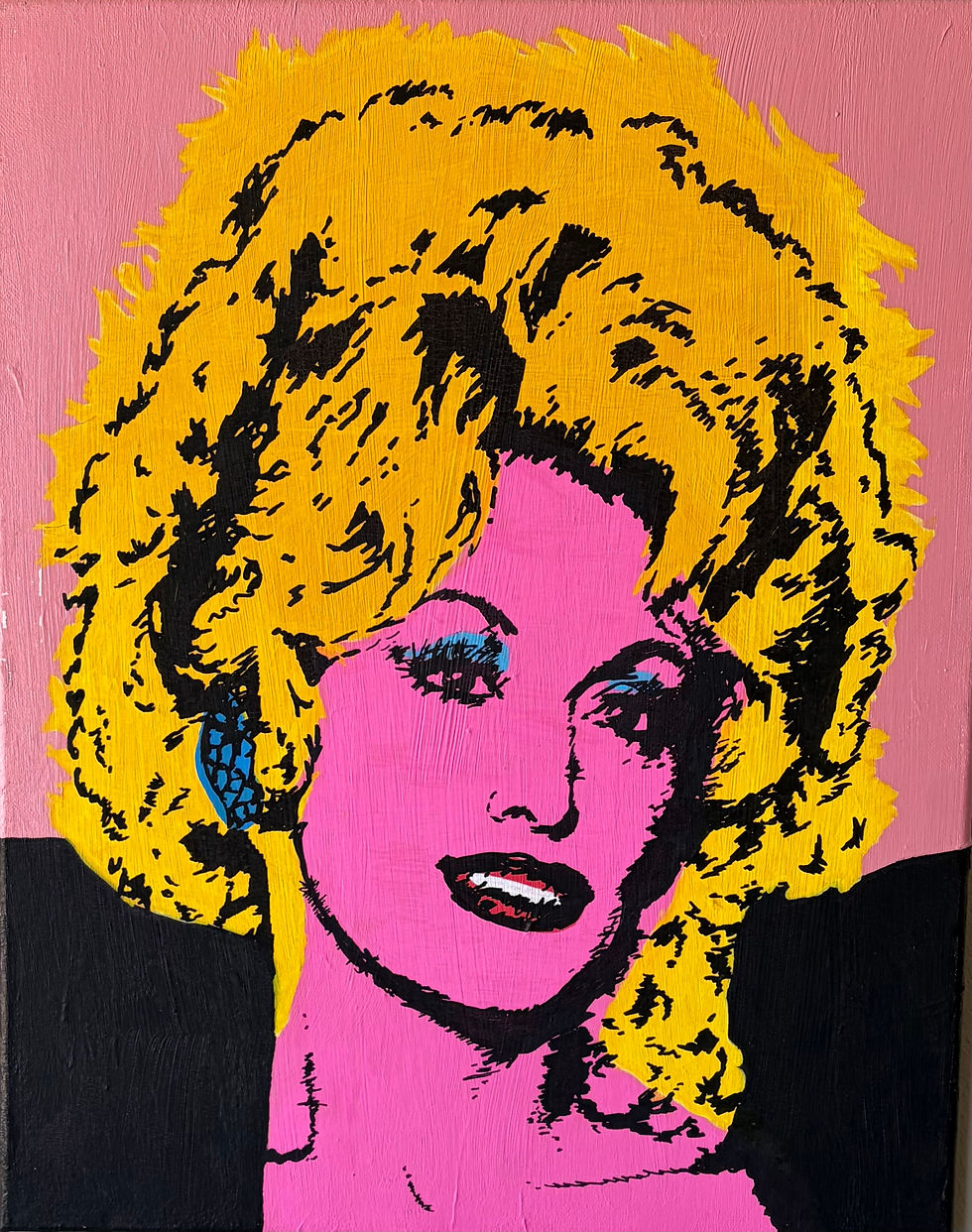


The Dolly series examines the iconic subject of Dolly Parton, less as an individual person and more of a self-constructed image.
The images are sourced from her performance in 1982's The Best Little Whorehouse in Texas. The work engages in the Warholian portraits of Marilyn Monroe and the broader fascination with celebrity and the transformation of people into cultural commodities. In Marilyn, Warhol had a muse who was the product of the Hollywood promotional press- while with Dolly, we are given a person who intentionally and carefully crafted their own public persona and image.
The accumulation of a life lived in (and for) the public eye is central to this series. We recognize Dolly (the icon) before we recognize Dolly (the actress) in the image from which the painting was made. Rather than simply repeating Warhol's approach, I've deliberately re-introduced labor and affection into this visual rather than rely on mechanical or digital repetition.